An introduction to Delivery Assurance

Johanna Maslem
Principal | National Delivery Assurance Capability Lead | AU
10 November 2026

The first official performance at the Sydney Opera House was 10 years late. Expert Delivery Assurance could have helped the curtains open on time.
Closer to 2026, the Thames Tideway Tunnel project team embedded strong governance and risk management – from the start – to effectively deliver this city-shaping megaproject. Delivery Assurance set the stage for success.
Sources: Project Management Institute; Institution of Civil Engineers
Here in Australia, infrastructure projects are increasingly expected to deliver more than physical assets. Success is now measured not only by cost, schedule and technical performance, but also by how effectively projects integrate with their broader environment, contribute to urban and social outcomes, and accommodate growing technological complexity. In this context, strong planning, a well-defined scope and robust procurement are essential foundations, but they are not enough on their own. A deliberate and ongoing focus on delivery risk is required throughout the project lifecycle to help ensure projects achieve their intended outcomes.
What is Delivery Assurance and why does it matter?
‘Delivery Assurance’ provides independent challenge, insight and verification across the project lifecycle, giving clients confidence that an asset is deliverable, risks are understood and managed, and project objectives can be achieved.
It sits somewhere between traditional project management and a formal audit. And the first word in Delivery Assurance is independence.
Strong Delivery Assurance teams collaborate closely with project management, project controls, cost management, and risk advisory specialists to provide clients with the confidence that every angle of their project has been assessed. They draw on a range of assurance models and approaches to provide a customised service that is right for the project, the stakeholders, and long-term asset performance.
“Delivery Assurance is not about finding fault. It's about providing independent insight that enables better decisions. By identifying risks, testing assumptions and challenging optimism bias early, assurance helps project owners, boards and investors make confident decisions and improve the likelihood of successful project outcomes.”—Johanna Maslem | National Delivery Assurance Capability Lead
Why do our clients use Delivery Assurance?
- Independent, and improved confidence in project performance and key decisions
- Early identification of issues before they become major problems
- Greater certainty around cost, schedule and outcomes
- Improved governance and accountability
- Evidence-based recommendations for corrective action

The Sydney Opera House is arguably one of the best examples of why modern Delivery Assurance exists.
Many of the issues that Delivery Assurance seeks to mitigate today occurred on the project: construction started before the design was fully developed, key structural issues were unresolved, and there were repeated changes to the scope.
Strong gateway governance could have brought these issues to light and prompted additional cost estimation and risk management.
Source: Project Management Institute
Assurance models and approaches
Delivery Assurance is not one single methodology, but rather a term that encompasses review and oversight activity that supports confidence in project success. Some of the most common models include:
Constructability assurance
Constructability assurance brings practical delivery expertise to project development, testing if the proposed design, construction methodology, sequencing, and delivery strategy are realistic.
Major infrastructure programmes like London's Thames Tideway Tunnel (referenced above) demonstrate the value of embedding delivery thinking and assurance throughout project development.
Best for: Complex and brownfield infrastructure, constrained sites, highly sequenced work, and projects with complex operational interfaces.
Limitations: Constructability advice delivers the most value when it's early enough to influence design and delivery decisions. Its effectiveness depends on the expertise and experience of the consultant.
Gateway assurance
One of the most widely used approaches, gateway assurance is particularly common in the public sector. Projects are reviewed independently at critical junctures to identify risks and opportunities as early as possible. To determine whether and how the project progresses to the next project phase, they must pass certain ‘gates’.
Gateway models vary, but common gates include:
- Business case approval
- Procurement strategy
- Market engagement
- Contract award
- Readiness for delivery
- Operational readiness
Best for: Gateway assurance works well for major capital programmes with significant public investment.
Limitations: Defined assurance points can become a lagging view of delivery performance in projects where there are overlapping phases or timelines.
Project health checks
A fast, targeted, and agile approach to Delivery Assurance is the ‘project health check’. Independent Delivery Assurance experts will perform point-in-time reviews of a project’s overall health or individual indicators, including:
- governance
- scheduling
- cost
- risk management
- procurement approaches
- stakeholder management
- resourcing
Delivery Assurance experts will then recommend a solution or action where required.
Best for: Project health checks work well for executive reporting, audits, or for a timely assessment of a project with challenges.
Limitations: As a fast, moment-in-time assessment, project health checks do not always go deep enough, or show whether recommendations are implemented or issues resolved.
Independent Project Reviews (IPR)
Not just for distressed projects, IPRs are often undertaken for projects that need a detailed, deep-dive assessment of their viability, the approach for specific project challenges, or prior to a major investment decision.
When conducting an Independent Project Review, Delivery Assurance teams can focus on a range of areas – or just one or 2 – including:
- The reliability of cost estimates – have the estimators tested delivery strategies, considered market conditions, interrogated the scope, and highlighted any areas of ongoing cost uncertainty?
- Programme realism – is it aspirational, or actually achievable?
- Independent Certification, Independent Review or Independent Verification - does the evidence show that things are correct, to standard, or compliant?
- Project controls maturity – has the project team tested the assumptions behind the set project controls? For example – is the schedule realistic? Is the Change Management methodology fit for purpose?
Best for: Complex projects, distressed projects, or major investment decisions.
Limitations: Where project health checks may be too shallow, Independent Project Reviews may be too resource intensive for certain projects or requirements.
Project controls assurance
Question: can you trust the information you have to make the critical decisions for your project?
What early indicators would warn us of a delivery delay, or a budget increase? large-scale data centre and energy projects, it’s a way to challenge the status quo or find holistic ways to accelerate delivery.
Delivery Assurance practitioners will investigate things like:
- How accurate have cost and schedule forecasts been over the last 6-12 months?
- What percentage of scope remains undefined?
- What assumptions underpin the Estimate at Completion (EAC)?
- Is there a clearly defined critical path?
- What risks could materially change project outcomes?
- Is reporting data consistent across systems, and how much manual intervention is required?
- What early indicators would warn us of a delivery delay, or a budget increase?
- Is there clear accountability for scope and cost outcomes?
For boards and investors, this is often one of the most valuable forms of assurance.
Best for: Megaprojects, data centres, energy, and transport infrastructure.
Limitations: Assessing project controls is critical, but this type of assurance can be enhanced with project health checks to identify and manage risk across design, integration, quality, commissioning and so on.
Investor, lender and funder assurance
While gateway assurance methodologies are common in the public sector, investor, lender and funder assurance is often used for privately financed assets and infrastructure investments.
Funders will engage independent advisors beyond the project team to provide an indicator of commercial confidence in their investment. In these scenarios, Delivery Assurance teams will review the budget, programme, contractor strategy, risks, and contingency approaches to answer the question:
Is my project investment still sound?
Usual formats are one-off independent due diligence reviews, or ongoing monitoring and/or certification throughout the project lifecycle - all aiming to ascertain whether the asset will be delivered as planned, and with the expected returns.
Best for: Property developments, major infrastructure projects, public-private partnerships (PPPs), data centres, renewable energy projects and private infrastructure investments.
Limitations: By its nature, the focus is on investment and commercial confidence. Projects may also need assurance that supports elements like technical, operational or systems readiness too.
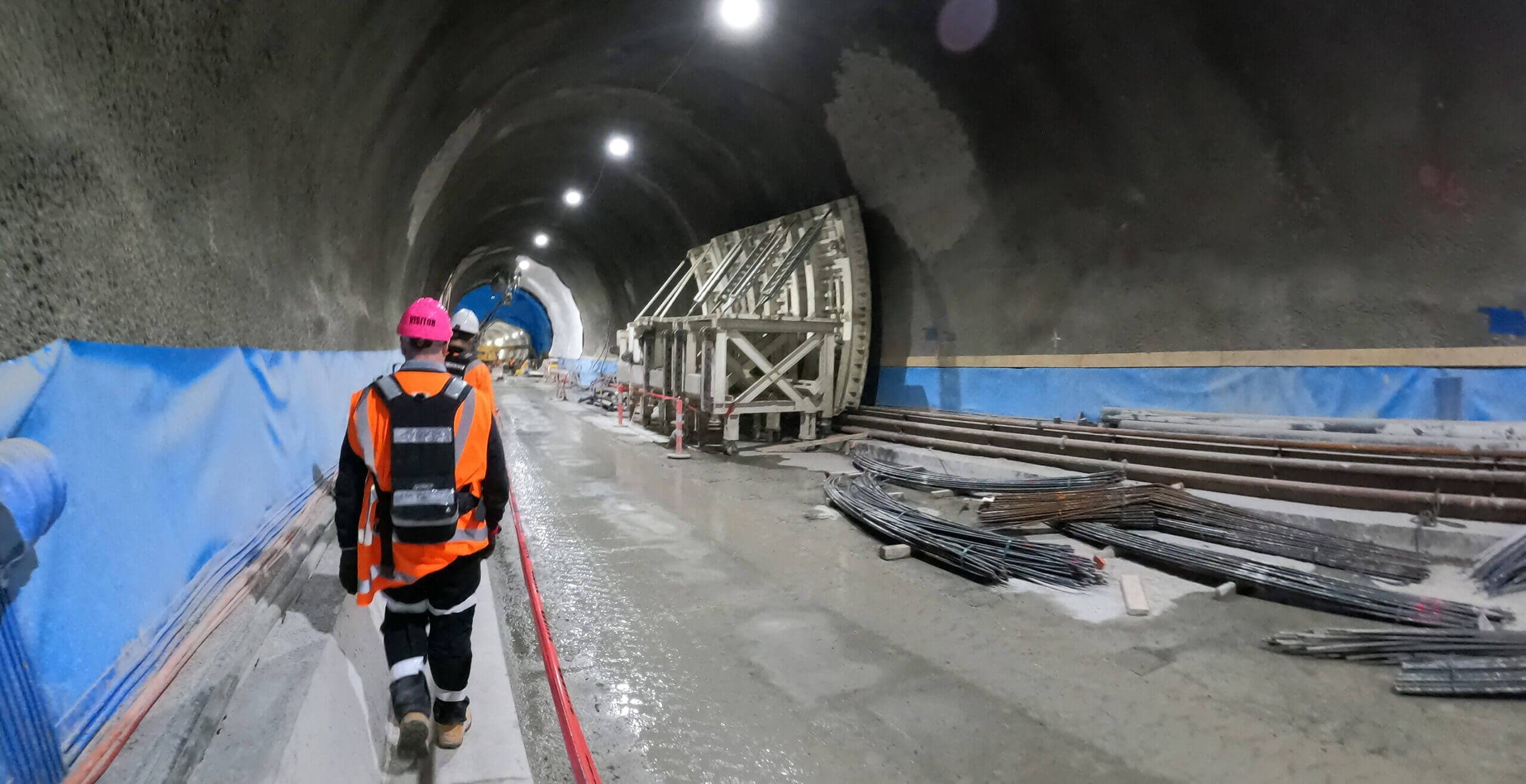
City Rail Link opened to the public on 13 September 2026.
Engaged by project sponsors Te Manatū Waka Ministry of Transport and Auckland Council since the project commenced, TSA Riley has provided independent advice and Sponsor’s Assurance on the project’s ability to deliver the approved scope, benefits, timeline, and budget, supporting governance.
Our role included identifying risks, conducting deep dive analyses, overseeing scope changes, monitoring compliance with the Delivery Agreement, and auditing inter-project reporting. Our advice has led to revised governance arrangements and enhanced visibility and engagement for the sponsors.
Our team included Terry Poynton, Tariq Mahmood, and Johanna Maslem.
For more information, visit our project profile: City Rail Link | TSA Riley.
TSA Riley’s Delivery Assurance team provide independent confidence that projects are deliverable, investable and ready to perform.
We combine hands-on construction and commercial experience with independent oversight. Our team has worked across government, contractor and financier environments, giving us practical insight into how projects are procured, staged and delivered - not just how they are planned.
Our Delivery Assurance services provide structured, risk-based oversight across the full lifecycle - from early constructability advice through to independent certification and operational readiness.
Email [email protected] to connect with the TSA Riley Delivery Assurance team today.
Meet the author
Johanna Maslem is TSA Riley’s National Delivery Assurance Lead for Australia. She strengthens project performance by equipping teams with the structure, insight and support needed to deliver complex transport programmes with long-term success. With a focus on delivery certainty, Jo embeds practical assurance processes and supports clients to make informed decisions that protect scope, time and operational outcomes. Jo brings 20 years of experience across client and consultancy.
Johanna Maslem
Principal | National Delivery Assurance Capability Lead | AU

Monika Sud
Managing Principal, NSW | National Advisory Lead | AU