Transpennine Route Upgrade West Alliance
Network Rail
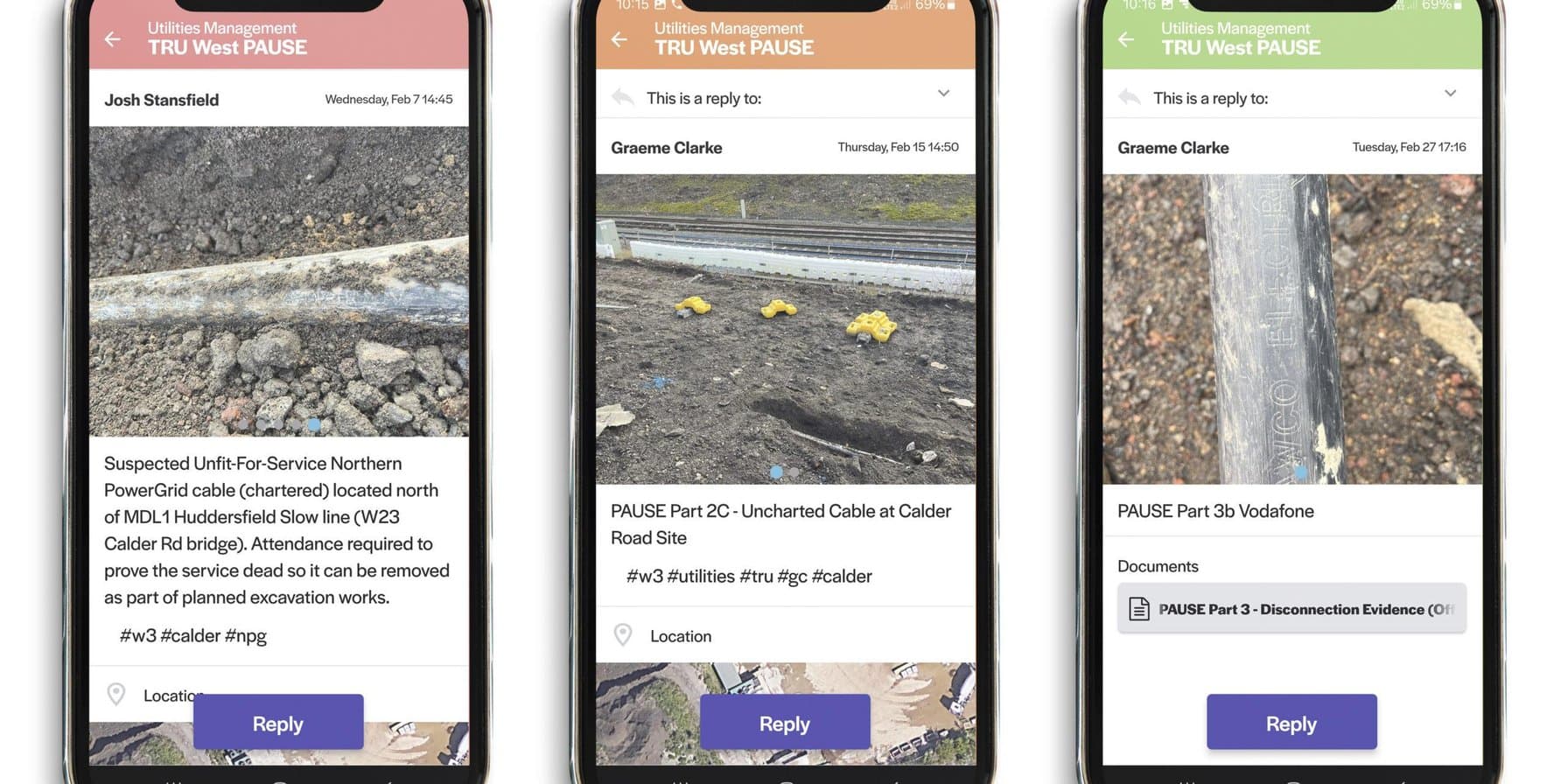
Utilities Management services to support the Transpennine Route Upgrade West Alliance.
Unchartered services are an industry-wide problem, causing unpredictable and costly project delays. With an estimated 60,000 Service strikes each year, they cost the construction industry an estimated £2.4 billion annually.
Due to the potential health and safety risk relating to buried services, protocol is to treat all unforeseen services as live, until proven otherwise. Unfortunately, this leads to construction work stopping and this is where delays and cost impacts arise.
The traditional industry process for resolving uncharted services differs between the various Statutory Undertakers (SU) and is complicated by uncertainty over service ownership. Response and site attendance times can vary depending on SU priorities.
Service Delivery
Our Utilities Management team workshopped the issue of uncharted services, exploring root causes, developing a workflow to collect abandoned utilities from boots on the ground in real time, so that delays and cost overruns could be mitigated by rapid response.
The team also documented, in an easy-to-use format, the steps needed to resolve abandoned utilities safely, avoiding potential communication issues.
Having captured the workflow and documented the steps, the team met SymTerra at Highways UK 2022 and embarked on a collaborative process of co-development, utilising SymTerra’s software platform to bring the workflow to life in an “app” for Proving of Abandoned & Unchartered Services Exercise, known as PAUSE.
Value Delivered
PAUSE was deployed on the Transpennine Route Upgrade programme in July 2023 and has so far delivered the following benefits:
- Clear and secure communication through the app captures everything in one place and avoids any miscommunication.
- Potential delays between encountering the asset and booking a site visit for the utilities management team to then begin the asset identification process have been reduced.
- Prioritisation of potentially unsafe assets is now prioritised by mandatory prompts and recording of safety assessment at each stage of the process.
- The need of the Utilities Management team to travel to site has been minimised, boosting productivity and reducing carbon impact.